
Skip to content
Dental Salon

Preventive

Night guards

A night guard (occlusal splint) is a custom appliance worn over the teeth, usually during sleep, to cushion the jaws and reduce wear from clenching or grinding (bruxism). It helps protect enamel and existing dental work and can be part of a broader plan when jaw soreness or morning tension may be related to bite habits.
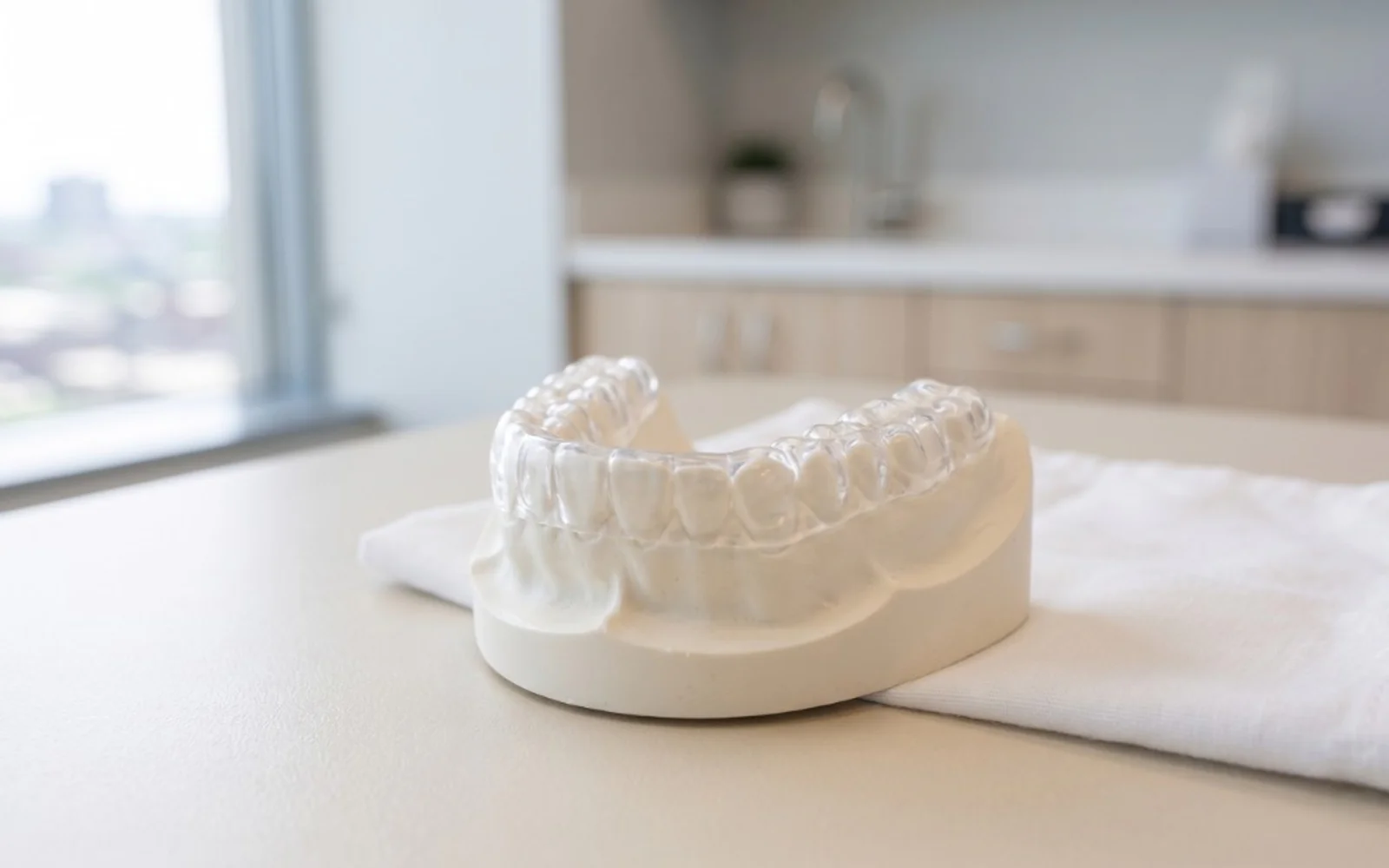
A clear custom night guard on a dental model in a bright treatment room at Dental Salon.

Whether you need one, and what a custom guard does

How to tell whether you grind

Most people who grind have no idea they grind, because it happens while they are asleep and nobody wakes up to report it. What they notice instead is a jaw that aches in the morning, teeth that have turned sensitive to cold for no obvious reason, headaches that start at the temples, or front teeth that look shorter and flatter in photographs than they used to. A partner hearing it is the most reliable sign of all. We look for the wear pattern itself, which shows on the teeth long before anyone connects the symptoms to a cause.

Custom guard versus boil-and-bite

A drugstore guard is better than nothing for a short stretch, and it is a reasonable way to find out whether you can tolerate wearing anything at all. What it cannot do is fit. Boil-and-bite material is bulky, it sets the jaw in whatever position the tray happened to take, and a guard that fits poorly can leave the bite worse than it found it. A custom guard is made from a scan of your own teeth, sits thinner, stays put without being clenched onto, and spreads the load the way it was designed to.

Getting used to one, and looking after it

The first few nights are the awkward part, and most people who give up on a night guard give up during the first week. Wearing it for an hour in the evening before bed helps more than anything else. After that we check the fit, because a guard that rubs is a guard that ends up in a drawer. Rinse and brush it in cold water rather than hot, which warps it, and bring it to your cleanings so we can read it against the wear on your teeth. A guard protects crowns, veneers, and implants too, which is often why it is recommended straight after cosmetic work.

Who it's a good fit for

  • You wake with jaw soreness, sensitive teeth, or headaches and suspect grinding or clenching
  • Your front teeth look shorter or more worn at the edges than they used to
  • You have new crowns, veneers, or implants and want a night guard to protect them while you sleep
  • You tried an over-the-counter guard that felt bulky, rubbed your gums, or would not stay in place

What to expect

  1. Exam: symptoms, sleep habits, and prior jaw or orthodontic care
  2. Impressions or digital scans for a custom night guard
  3. Delivery: seat the guard, check bite, review insertion, removal, and cleaning
  4. Follow-up: small adjustments after several nights of wear if needed

Common questions

How is a custom night guard different from one from a drugstore?
Custom guards are fabricated from models of your teeth, so they seat evenly and stay in place with less bulk. That usually means better comfort, better protection, and fewer sore spots than generic trays you soften in hot water at home.
Will wearing a night guard cure my jaw pain?
A guard often reduces muscle strain and tooth wear from grinding, which helps many people feel better. Jaw pain can have several causes, though, so we treat the guard as one part of a plan. If symptoms persist, we discuss other options or referrals when appropriate.
How long does a night guard last?
Many patients get several years from a well-made guard with proper care, but heavy grinders may wear through the material sooner. Bring it to checkup visits so we can look for wear and tell you when a replacement makes sense.
Does dental insurance cover night guards?
Some plans contribute toward bruxism appliances; others apply the benefit only to certain codes or once per number of years. We verify benefits when we can and give you a written estimate before you commit.
Do you accept patients without insurance?
Yes. We offer a membership plan for uninsured patients ($350/year for the first member, $300/year for each additional member) that covers exams, x-rays, two standard cleanings, a take-home whitening kit, and 15% off other procedures.
Are night guards FSA or HSA eligible?
Yes. Custom night guards prescribed for bruxism (grinding) or to protect dental work are eligible expenses under FSA and HSA accounts. Bring your account card to the delivery appointment.

Book a consultation

Available at both offices. Pick the one that's closer to you.

Related services

Related reading