
Skip to content
Dental Salon

Surgical

Oral surgery & wisdom teeth

Oral surgery is the branch of dental care that treats problems needing a surgical answer rather than a filling or a crown: impacted wisdom teeth, teeth that cannot be saved, and rebuilding bone where a tooth has been lost.
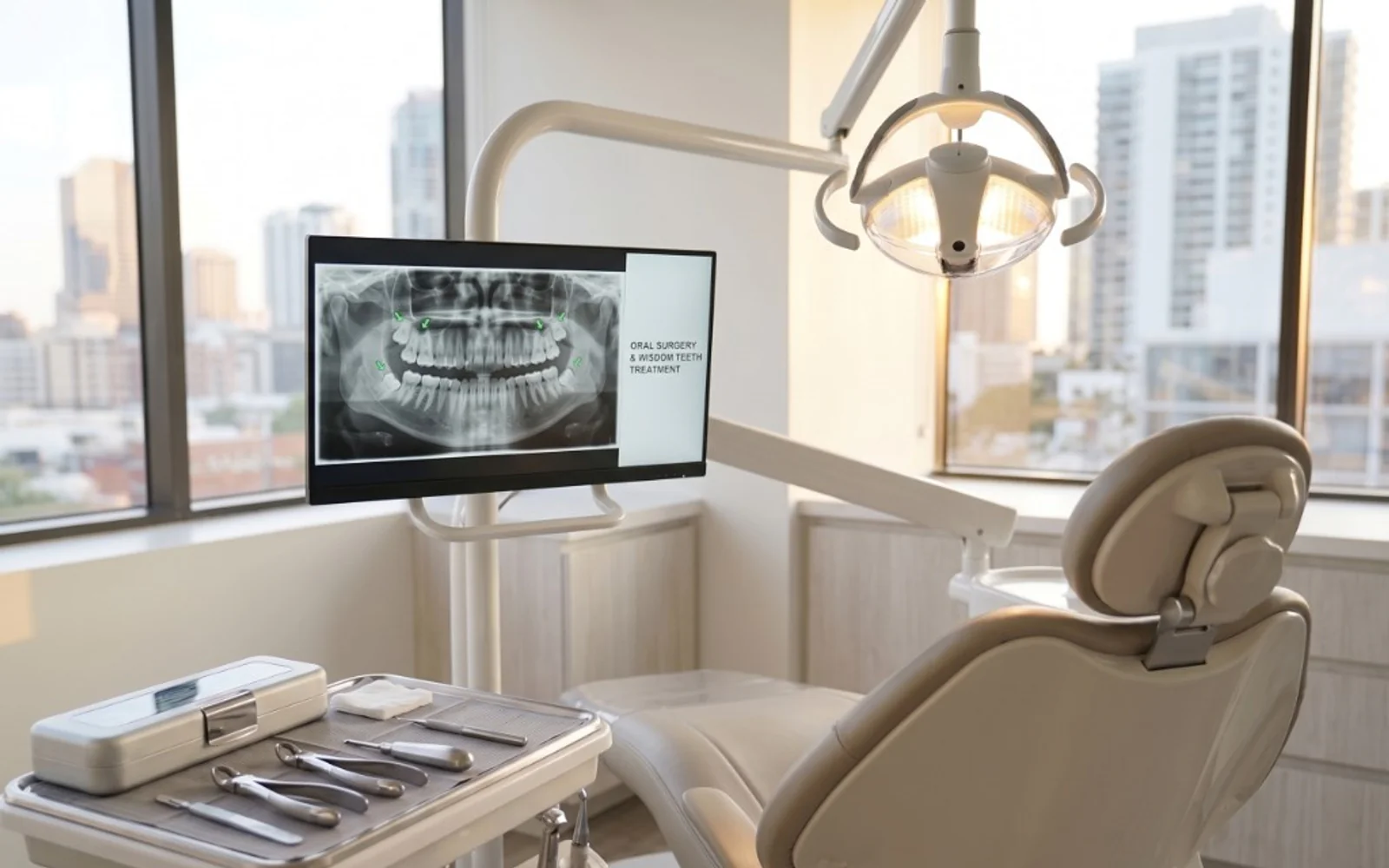
Modern dental operatory with a panoramic X-ray on the monitor, dental chair, and surgical instruments ready for oral surgery and wisdom teeth treatment.

How we handle oral surgery and wisdom teeth

What counts as oral surgery

Oral surgery is a category rather than a single procedure, and most of it is more ordinary than the name suggests. Wisdom teeth account for the largest share. After that come extractions of teeth that have broken below the gum line or failed after a root canal, bone grafting that keeps the site suitable for an implant later, and smaller procedures such as exposing a tooth for orthodontics or removing a lesion for biopsy. A few cases genuinely belong in a hospital, jaw reconstruction and facial trauma being the usual examples, and we will say so rather than attempt them.

Why this is not a referral out

In most practices oral surgery means being sent somewhere else. Dr. Mustafa Saad carries out surgery at both of our offices, which changes the calendar more than anything else does. The dentist who found the problem, the surgery itself, and the healing check all happen in the same building against the same records, so nothing waits on notes moving between two practices. It also means the plan for what replaces the tooth is made before it comes out, which is the part that gets lost when the extraction and the replacement belong to different offices.

Cost, sedation, and a straight answer first

Every case starts with an exam and a panoramic x-ray or 3D scan, and you get a written estimate before anything is booked. Insurance covers surgical extractions more often than people expect, and we will tell you what yours is likely to pay rather than leaving you to discover it afterwards. Oral and IV sedation are both available and both optional, since a great many extractions need nothing beyond local anesthetic. For how the appointment runs at each location, read about oral surgery at our Lincoln Park office or oral surgery in Schaumburg.

Who it's a good fit for

  • You're a teen or young adult with wisdom teeth causing pain or pressure
  • You have a tooth that can't be saved and needs a careful extraction
  • You need a failing tooth removed before restorative work can start
  • You want sedation (oral or IV) for a longer or anxiety-heavy procedure
  • You prefer having surgery and follow-up with the same in-house team

What to expect

  1. Consult: exam, x-rays or 3D scan, written cost estimate
  2. Pre-op instructions: eating, sedation choice, and ride home if sedated
  3. Procedure day: local anesthetic; oral or IV sedation available
  4. Recovery: most people back to a soft diet in 3–7 days
  5. Follow-up: healing check 1–2 weeks after surgery

Common questions

Do all wisdom teeth need to come out?
No. Only when they're impacted, causing pressure or infection, crowding the other teeth, or in a position where they'll be hard to keep clean. We take a panoramic x-ray and tell you honestly what we'd recommend and why.
Will I be put to sleep for the surgery?
It's your choice. Local anesthetic alone is enough for many cases. Oral sedation makes you drowsy and relaxed; IV sedation puts you in a 'twilight' state where you usually don't remember the procedure. The dentist doing your procedure will walk through which is right for your case.
How long is the recovery?
Most patients are off pain medication and back to a normal soft diet within 3–5 days. Full healing of the socket takes 2–3 weeks. We give you written instructions and a phone number to reach the office if anything feels off.
Can the empty socket be saved for an implant later?
Yes. Bone grafting at the time of extraction preserves the socket so an implant can be placed cleanly months later. We discuss this before surgery if it applies to you.
Does insurance cover oral surgery?
Most dental plans cover surgical extractions and wisdom-tooth removal at least partially; some cases (impacted teeth, jaw pathology) are also covered by medical insurance. We verify benefits before scheduling.
Is oral surgery FSA or HSA eligible?
Yes. Surgical extractions, wisdom tooth removal, bone grafting, and any sedation used during surgery are all eligible expenses under FSA and HSA accounts. Bring your account card to the appointment.

Book a consultation

Available at both offices. Pick the one that's closer to you.

Who provides this care

Oral surgery & wisdom teeth at each of our offices

Hours, parking, and the team differ by office. These pages cover the details for each one.

Related services

Related reading