
Skip to content
Dental Salon

Restorative

Dental bridges

A dental bridge is a fixed restoration that replaces one or more missing teeth by joining artificial teeth to supporting teeth or to dental implants. Unlike a removable partial denture, a bridge that is cemented or attached to stable anchors stays in place for eating and speaking.
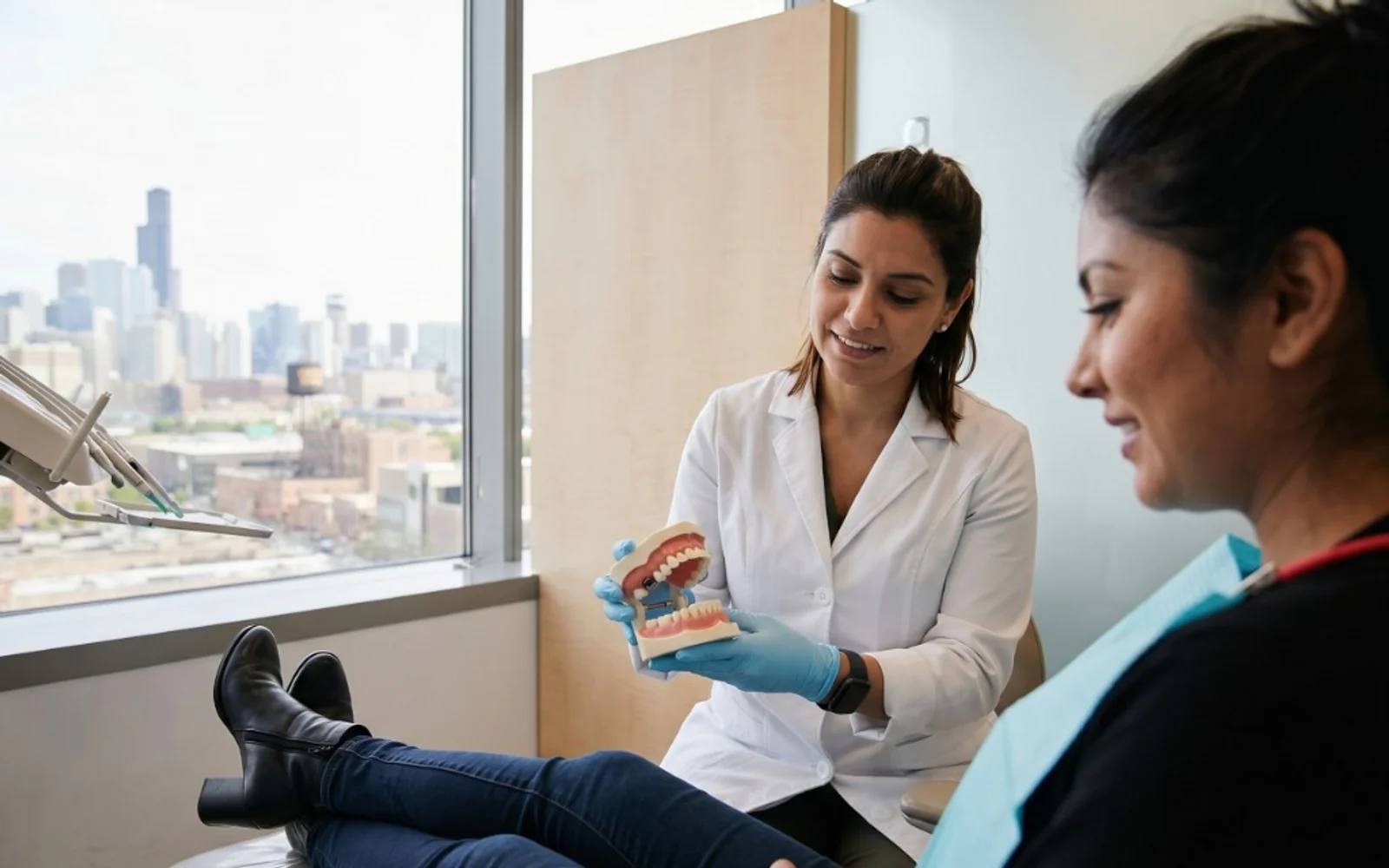
Dentist explaining treatment options with a dental model while consulting with a patient in the treatment room.

Missing teeth change how you chew, how forces move through your bite, and sometimes how you feel about smiling. A bridge can close a smaller gap when neighboring teeth or implants are healthy enough to support the restoration. At Dental Salon we walk through every option that fits your situation, including bridges, implants with crowns, partial dentures, or observation when delaying treatment is clinically safe.

Your plan depends on how many teeth are missing, the condition of anchor teeth, gum health, and your goals. Traditional bridges use crowns on teeth beside the space. Implant-supported bridges attach to implants when that is the better long-term choice for support or when you want to avoid shaping virgin teeth. Our team coordinates exams, any periodontal care, imaging, and bite checks at the office where you are being seen.

Who it's a good fit for

  • You're missing one tooth or a short span and want a fixed dental bridge
  • You had a tooth extracted and want to compare a bridge with an implant or partial
  • You have an older bridge that feels loose, shows wear, or traps food
  • You have or are planning implants and need the bridge segment to complete your bite

What to expect

  1. Consult: bridge vs implant vs removable options, with photos or scans when needed
  2. Prep: tooth preparation, impressions or scans, temporary if waiting on the final bridge
  3. Try-in: confirm bite and appearance before cementation or attachment
  4. Home care: cleaning under the pontic and along abutments

Common questions

How long does a dental bridge last?
Many bridges last roughly a decade with strong hygiene and regular checkups. Heavy grinding, diet, or decay at the margins can shorten that. We inspect existing bridges at routine visits and tell you when repair or replacement is the safer choice.
Bridge or implant: how do you decide?
For a single missing tooth, if the neighbors are healthy and untouched, an implant-supported crown often avoids shaping those teeth. If those teeth already need crowns, a bridge can be efficient and very durable. Longer spans often lean on implants for support. We compare benefits, timeline, and cost with you at the consult.
Does getting a bridge hurt?
Tooth-supported bridges use local anesthetic during preparation, similar to a crown visit. Short-term sensitivity with a temporary is common. Implant-supported bridges follow the healing and attachment steps already in your implant plan.
How do I clean under a bridge?
You still brush the tops and use floss threaders, superfloss, or a small interdental brush to reach under the pontic where bristles do not fit. Hygienists show you what works for your exact bridge design.
Will my insurance pay for a bridge?
Many plans help with conventional tooth-supported bridges as major services, subject to deductibles, waiting periods, and frequency limits. Implant-supported bridge coverage varies more by plan. We verify benefits when we can and give a written estimate before you commit.
Are dental bridges FSA or HSA eligible?
Yes. Both tooth-supported and implant-supported bridges are eligible expenses under FSA and HSA accounts. So is any preparation work (extractions, periodontal care) needed before the bridge.
How long does it take to get a bridge from start to finish?
Most tooth-supported bridges take 2–3 weeks total: preparation and temporary at the first visit, then final delivery once the lab returns the permanent bridge. Implant-supported bridges follow the implant timeline (3–6 months for integration, then the bridge is placed).

Book a consultation

Available at both offices. Pick the one that's closer to you.

Related