
Skip to content
Dental Salon

Specialty

Periodontal care

Periodontal care is the diagnosis and treatment of disease in the gums and the bone that holds the teeth, ranging from gingivitis that reverses completely to periodontitis that has to be managed for life.
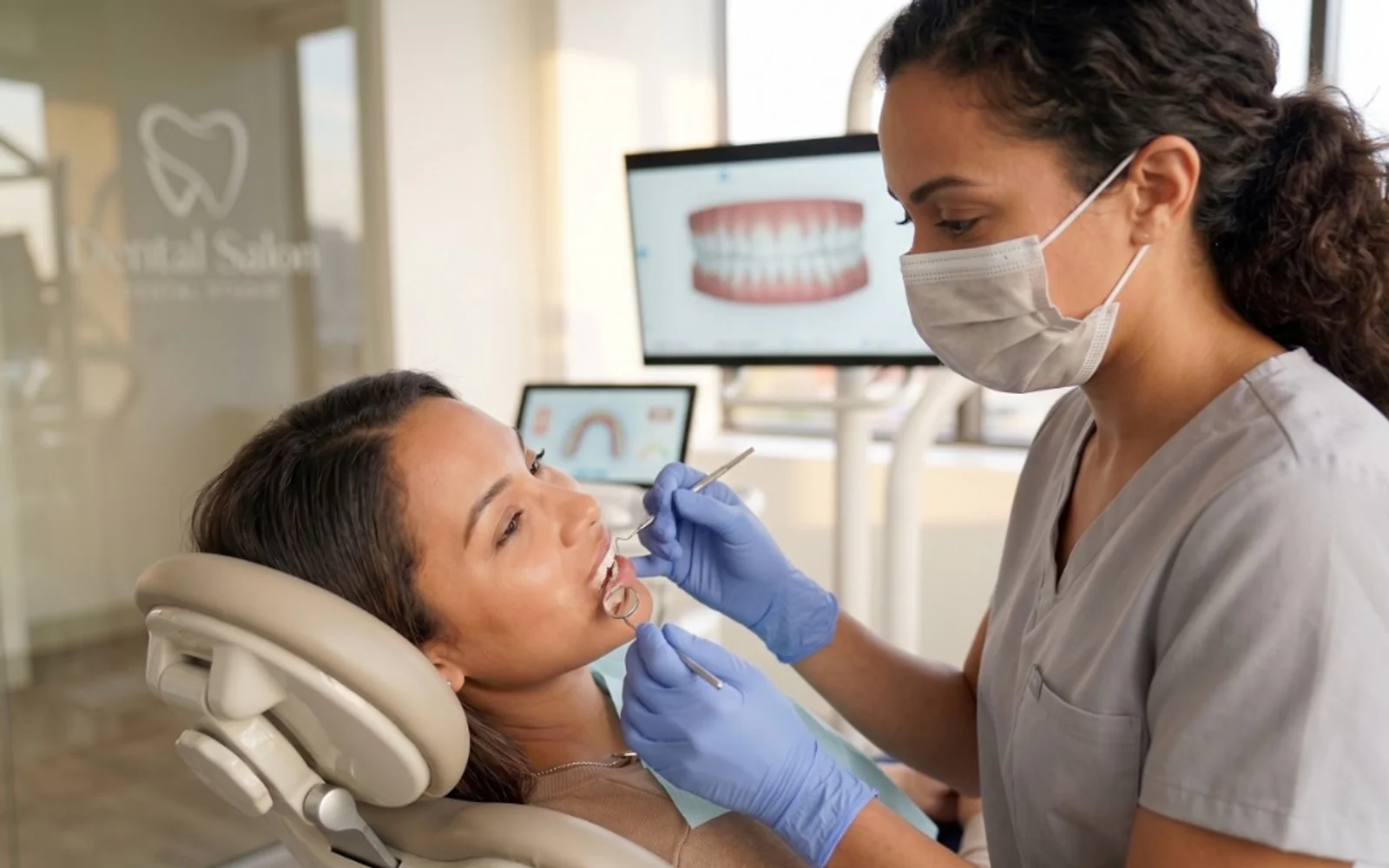
Dental professional examining a patient's teeth with a mirror and probe, with a 3D dental scan on a monitor in the background.

How we treat gum disease

Gingivitis and periodontitis are not the same problem

Gum disease comes in two grades and the distinction decides everything that follows. Gingivitis is inflammation of the gum alone: it bleeds when you brush, and it reverses completely with a proper cleaning and two weeks of better habits. Periodontitis has gone past the gum into the bone that holds the tooth, and bone does not grow back on its own. That is why periodontitis is managed rather than cured, and why the goal shifts from reversing the damage to stopping it where it is. Bleeding gums are worth taking seriously precisely because the reversible stage is the one with no pain in it.

What the exam measures, and what treatment involves

A periodontal exam is mostly measurement. We probe the pocket around each tooth in six places, record where it bleeds, and read the bone level off x-rays, which produces a number per site rather than an impression. Pockets up to three millimeters are healthy. Four and five usually respond to scaling and root planing, a deeper cleaning under local anesthetic that removes deposits from the root surface below the gum line. Deeper than that, or sites still bleeding after a cleaning, is where surgical access or grafting comes in. Recession is a separate problem with its own answer, a graft that covers the exposed root.

Who treats gum disease here, and why it comes first

Dr. Praveen Gajendrareddy is the periodontist at both offices. He is board certified, a Diplomate of the American Board of Periodontology, and Professor and Head of the Department of Periodontics at the UIC College of Dentistry. He works alongside the general dentist who sees you for check-ups rather than at a separate practice, so the records and the plan are shared rather than posted. Untreated gum disease is also the most common reason work on dental implants has to wait, because a post placed into inflamed bone is being set up to fail, so this is usually the first stage of a larger plan rather than a detour from it.

Who it's a good fit for

  • You have signs of gum disease: bleeding gums, bad breath, or deep pockets
  • You've been told you have bone loss or that you need a deep cleaning
  • You have a tooth that feels loose or a gumline that's pulled back
  • You're planning implants or major restorative work and need healthy gums first
  • You manage diabetes, are pregnant, or have heart disease and your doctor flagged gum health

What to expect

  1. Exam: probing depths, x-rays, photos, and a written summary of gum health
  2. Deep cleaning if needed: scaling and root planing under local anesthetic
  3. Re-check: 4–6 weeks later to confirm gums are responding
  4. Surgery if indicated: pocket reduction, grafting, or regenerative care
  5. Maintenance: recall cleanings every 3 months for most treated cases

Common questions

What's the difference between a regular cleaning and a 'deep cleaning'?
A regular cleaning removes plaque and tartar above the gum line. A deep cleaning (scaling and root planing) goes below the gum line to clean the root surfaces and is done under local anesthetic when there's pocketing or active gum disease. It's the standard first step for periodontitis.
Can gum disease be reversed?
Early gum disease (gingivitis) can be reversed with good care. Once bone is lost (periodontitis), the bone usually doesn't grow back on its own, but we can stop the disease from progressing and, in some cases, regenerate bone surgically. Earlier treatment means less work.
Do you do gum grafting?
Yes. Our periodontist performs gum grafting (connective-tissue grafts and minimally invasive techniques) for receded gums and exposed roots. We'll show you photos of similar cases at your consult.
Why do I need to see a periodontist before my implant?
Implants need healthy gum tissue and adequate bone to last. If you have gum disease or bone loss, treating it first dramatically improves long-term implant success. Our periodontist places implants in-house, so the periodontal foundation and the surgery are coordinated.
Does insurance cover periodontal treatment?
Most dental plans cover periodontal exams, deep cleanings, and a portion of surgical care. We verify benefits up front and provide a written estimate before any treatment.
Is periodontal care FSA or HSA eligible?
Yes. Periodontal exams, deep cleanings (scaling and root planing), gum grafts, and other surgical periodontal care are all eligible expenses under FSA and HSA accounts.
How often will I need maintenance visits after periodontal treatment?
Most patients move to a 3-month periodontal maintenance schedule after active treatment, instead of the standard 6-month cleaning. The shorter interval keeps pockets stable and reduces the chance of disease coming back. After several stable visits, some patients can extend to 4 months; few return to a 6-month schedule.

Book a consultation

Available at both offices. Pick the one that's closer to you.

Who provides this care

Periodontal care at each of our offices

Hours, parking, and the team differ by office. These pages cover the details for each one.

Related services

Related reading